Design Consulting at Cornell · 2023
Revamping Weill Cornell Medicine's Search Platform
Patients had access to endless medical information but no clear way to know what to trust. I led the design of a platform that made credible health information easier to discover, understand, and navigate.
The problem
Navigating health information online is overwhelming and unreliable. There are 1 billion health-related searches on Google every day. MedExplain's platform, backed by Weill Cornell Medicine, had high bounce rates and low interaction rates due to poor navigation and cluttered UI.

What we learned from 4 competitors
Competitive audit across existing health information platforms
Strengths
✅ Diverse articles
✅ Professional sources
✅ Simple yet functional
✅ Clean interfaces
Weaknesses
❌ Distracting advertisements
❌ Cluttered layout
❌ Complicated terminology
❌ Overly broad search results
Design priorities
Credibility
Establish trust through professional sources, doctor credentials, and institutional backing
Navigation
Simplify the journey from search to article with clear information hierarchy
Branding
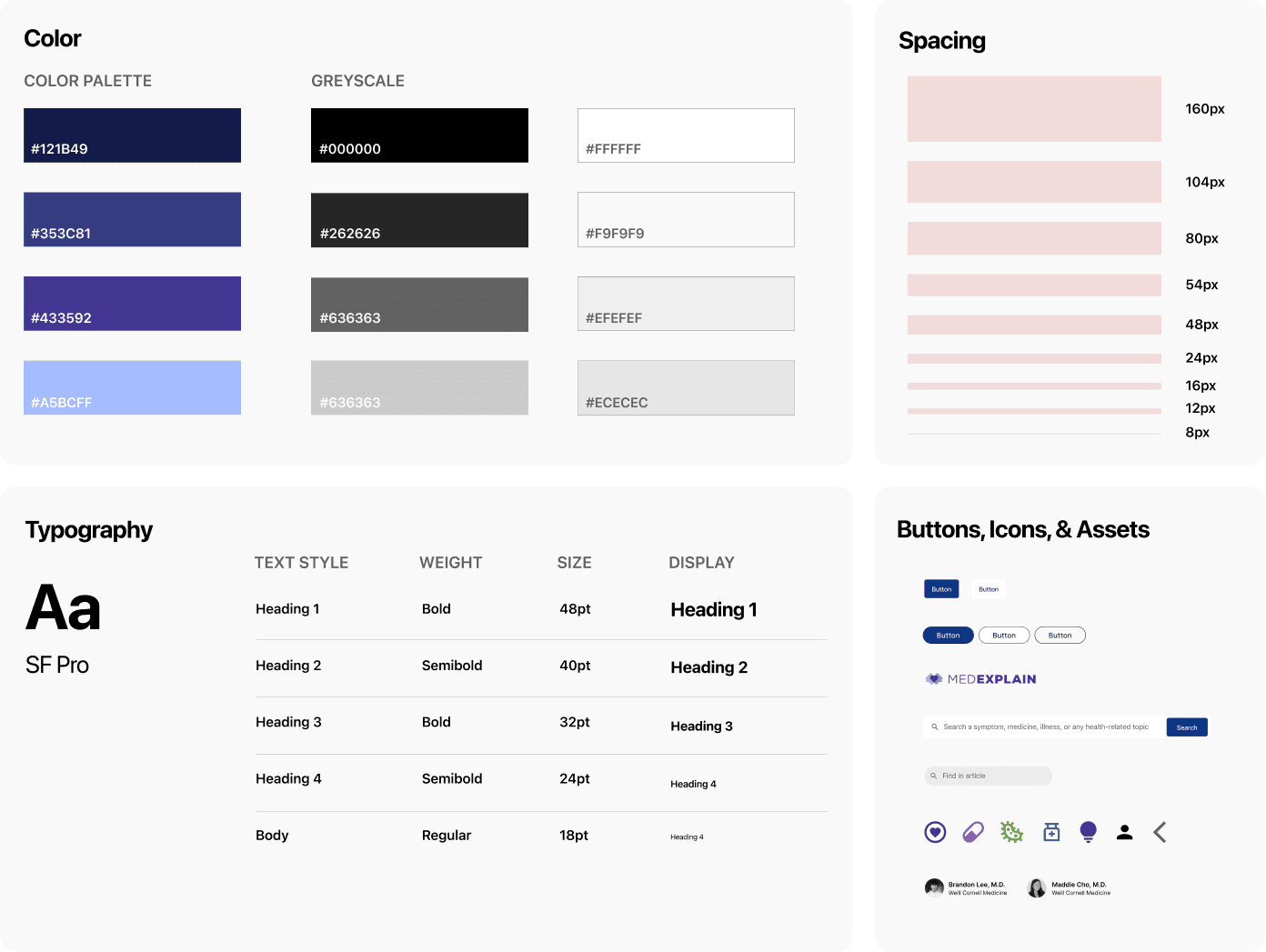
Balance clean and welcoming visuals to create consistent, trustworthy branding
Visual exploration & iteration
We combined the strongest aspects of each iteration to create a strong, collective vision — balancing clean aesthetics with welcoming, accessible visuals.
Final design
Clear and immediate purpose with a strong CTA in the search bar.

Concise summaries verified by reliable doctors, with accessible filter options.
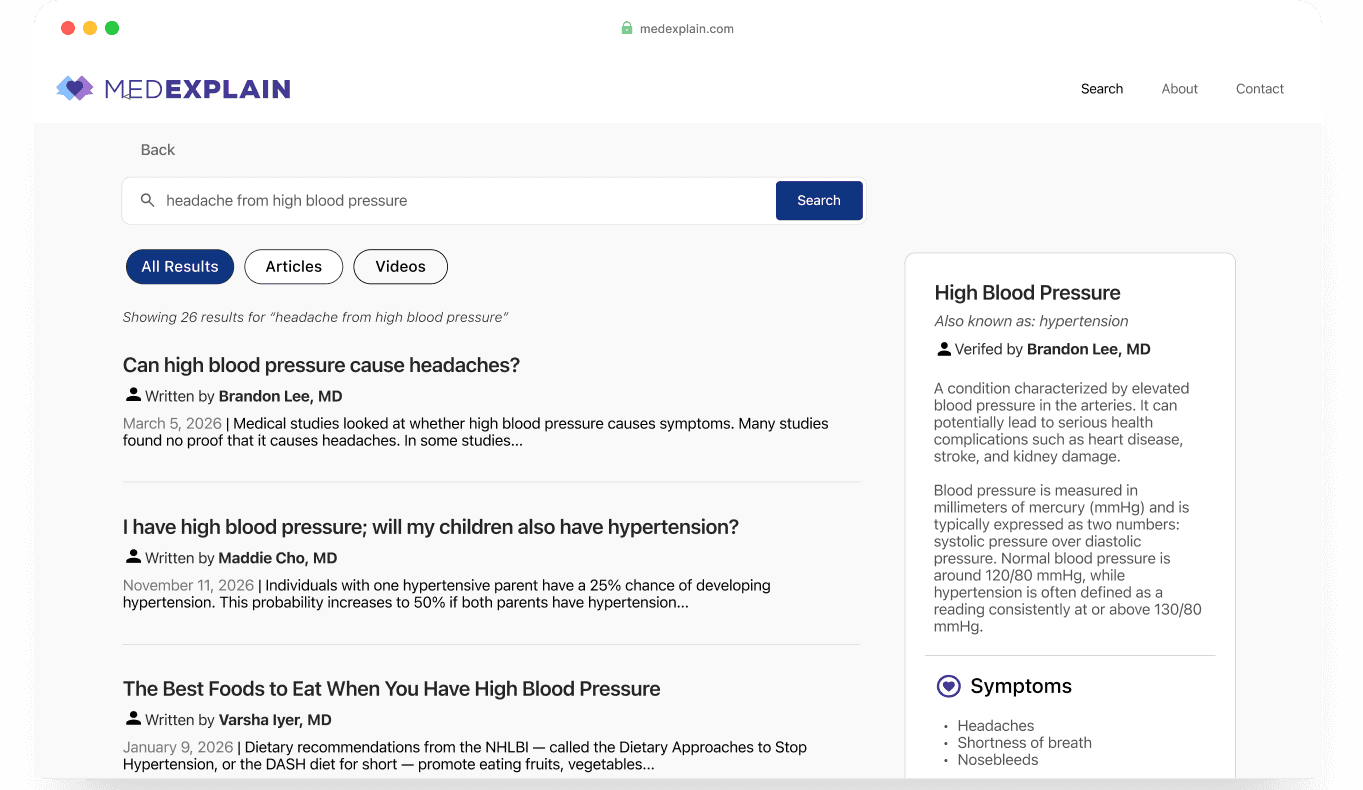
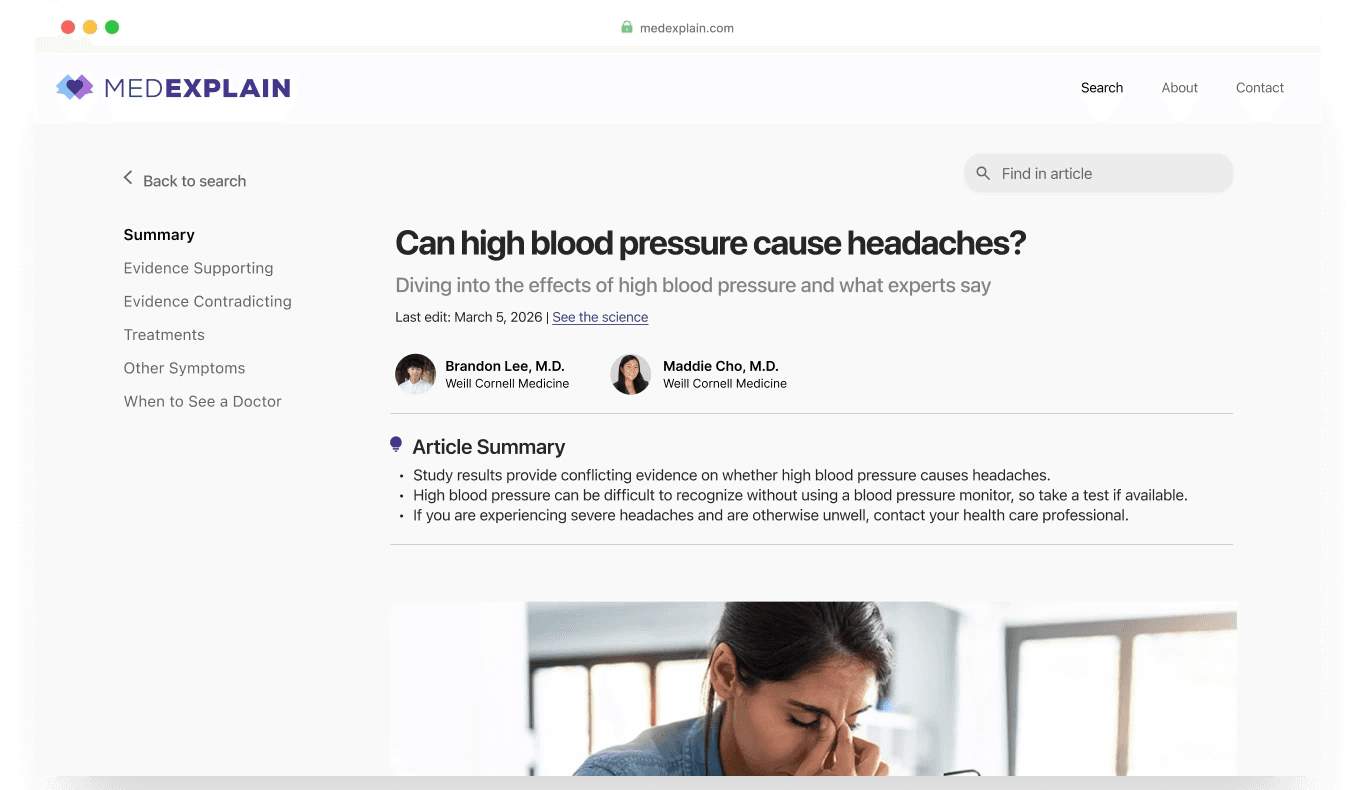
Easy navigation, option to view authors' credentials for trust.
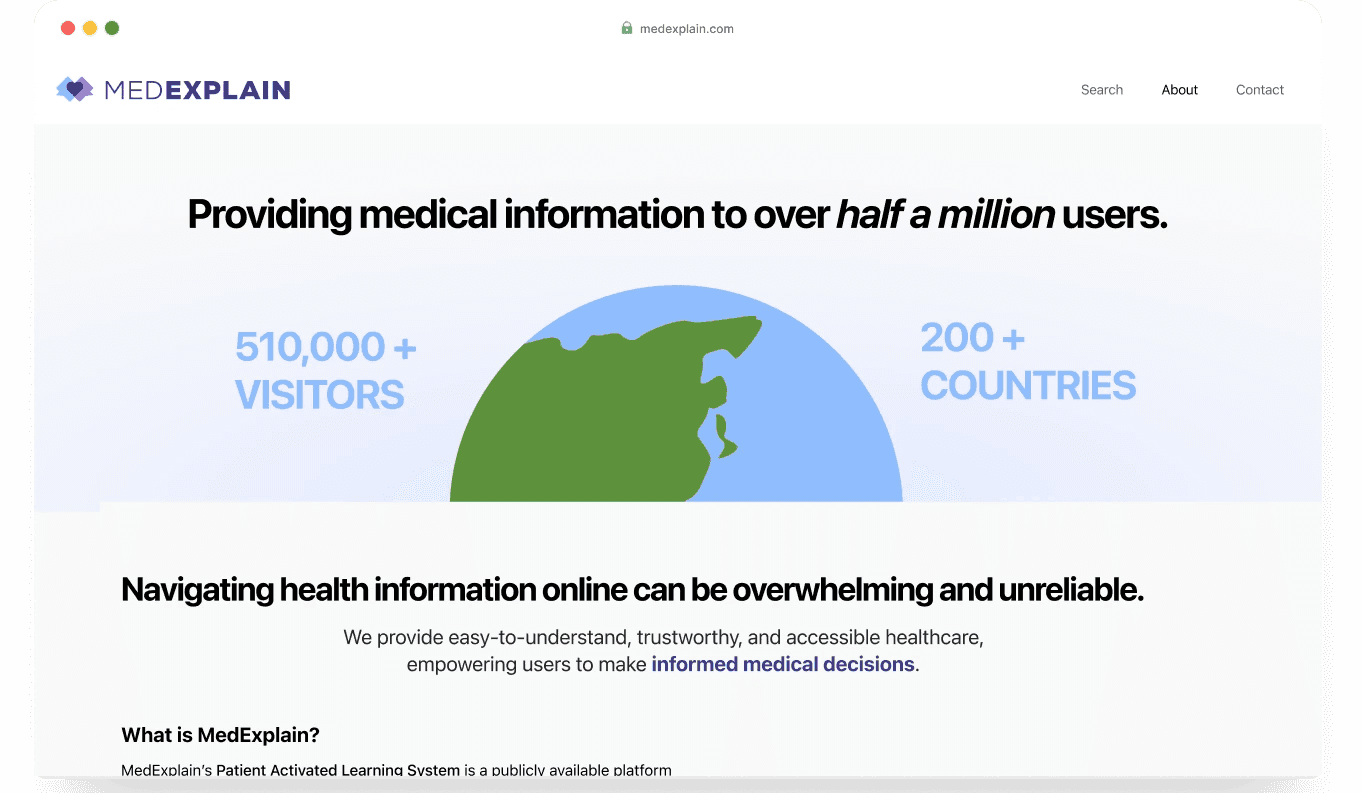
MedExplain's purpose stated directly, backed by statistics and testimonials.
Results
96%
task success rate
↑ from 66% baseline
4.42/5
helpfulness & trustworthiness rating
47.8%
higher than existing competitors
Second round of testing conducted on 25 individuals. Documented designs for developer handoff.
Reflection
Designing for an ambiguous target user group was the core challenge. We aligned through a singular persona that enabled us to leverage storytelling to empathize with our users.
This project taught me how to design for accessibility in the healthcare space — and how to balance credibility with approachability when the stakes are someone's health.